Individual
₹303
- Sankalpam for 1 person
- Optional: add Prasadam, delivered to you — +₹102
Included
- Sankalpam performed with the participant details you provide
- Online joining instructions
Starts at: ₹303
Together in prayer • Online, from wherever you are
Join us in offering prayers to Goddess Chandi for the well-being of our families and the wider community — online, from wherever you are.
Chandi Homam is a sacred fire offering dedicated to Goddess Chandi, a form of Devi. It is built around the recitation of the Devi Mahatmyam — also called Durga Saptashati or Chandi Path — seven hundred verses found within the Markandeya Purana that describe the Goddess in her many forms. The text is traditionally recited in three parts (charitas), each centred on a different episode of the Goddess overcoming a great adversary, and is among the most widely recited devotional texts in Devi worship across India.
"Chandi" (also Chandika) is itself one of the names of the Goddess — traditionally understood as her fierce, protective aspect, invoked especially when strength, courage, and safeguarding are being sought. A Chandi Homam pairs this recitation with a Vedic fire offering: mantras are chanted and offerings (ghee and other sacred materials, as prescribed by the officiating priests) are made into the consecrated fire, in keeping with homa tradition.
In this Samuhika Nava Chandi Homam, devotees come together in collective worship, with sankalpam offered for registered participants according to the ceremony's arrangements. "Samuhika" means collective — many families uniting in one shared offering rather than each performing it alone. This is a long-established practice in Devi worship: a single ritual performed once, on behalf of many households together, so that the benefit of the recitation and offerings is considered shared among all participating families.
Traditionally, "Nava" points to the nine forms of the Divine Mother (Navadurga) invoked in this worship, or to the nine nights of Devi worship observed during Navaratri, depending on the tradition followed. For this Samuhika Nava Chandi Homam, that meaning is confirmed below.
For this Samuhika Nava Chandi Homam, "Nava" refers to the nine divine forms of Goddess Chandika (Durga) invoked and honoured during the ritual.
Devotees offer Chandi Homam as an expression of devotion to the Divine Mother, seeking blessings for courage, peace, protection, and well-being.
The Devi Mahatmyam recounts how, at moments when other divine powers could not prevail against great adversaries, their combined energies gave rise to the Goddess, who restores balance and protects dharma. Devotees traditionally recite this text and perform the accompanying homa in remembrance of that restoration — turning to the Divine Mother in precisely those times when one's own strength feels insufficient.
The worship invites us to reflect on the overcoming of negative tendencies and to approach life's challenges with faith and inner strength. Devi is traditionally regarded as the source of shakti — the inner strength that sustains a person through difficulty — and Chandi Homam is one of the ways devotees turn to that source directly.
Fire offerings (homa) are, in Vedic tradition, a way of turning intention into action: what is offered with sincerity into the sacred fire is believed to be carried as an offering to the Divine. Collective participation brings families and the community together in shared prayer, multiplying that intention many times over.
In tradition, Chandi Homam is especially associated with seeking protection for the home and family, courage in the face of difficulty, and the removal of obstacles that have resisted other remedies — offered here collectively, once, on behalf of every registered family.
Devotion to the Divine Mother
An offering of sincere prayer and remembrance to Devi in her many forms.
Prayers for family and community well-being
A collective sankalpam offered for the health, harmony, and prosperity of every participating family.
Courage and inner strength (Shakti)
Devi is traditionally regarded as the source of shakti — the inner strength said to sustain a person through adversity.
Protection from negative influences
Traditionally sought as a means of safeguarding the home and family from negative influences.
Removal of obstacles
Associated in tradition with clearing obstacles that have persisted despite other efforts.
Shared spiritual practice
Performed collectively, so the intention of many families is carried together in one sankalpam and one offering.
These are devotional intentions and traditional beliefs, not promises of a particular outcome.
Protection and removal of negativity
Health and well-being
Prosperity, success, and harmony
Astrological balance
These are devotional intentions and traditional beliefs, not promises of a particular outcome.
Your confirmed participant details will be included in the sankalpam arrangements for your selected package.
Provisional sequence, subject to the priest-approved programme.
Chandi worship is associated especially with Devi celebrations such as Navaratri. The date and ritual arrangements for a particular homam are determined by the organising priests.
All times are in IST (India Standard Time).
Take time for prayer, seek Devi's blessings, and join a community gathered in devotion — all from your own home.
What is included depends on your package. Each package below lists what is included, what is optional, and what is not included.
₹303
Starts at: ₹303
₹501
Starts at: ₹501
₹708
Starts at: ₹708
Bringing family members with a different Gotra? Each person with a different Gotra is counted as an additional entry when you enter their details in the form.
eSankalpam is a Bangalore-based platform for booking certified Vedic pandits for home pujas, homas and rituals. Our previous community event was the Maha Shivaratri celebration held on 15 February 2026.
Details of the officiating priests will be added here once confirmed.
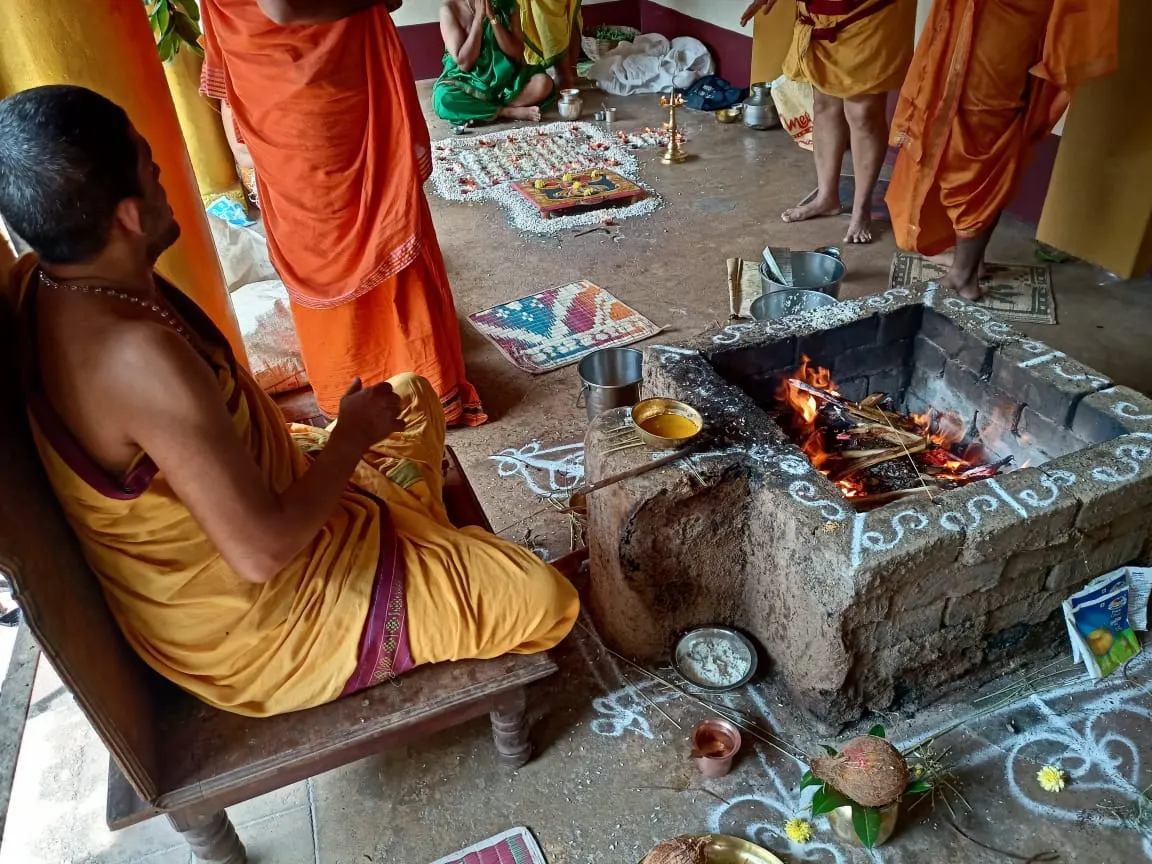
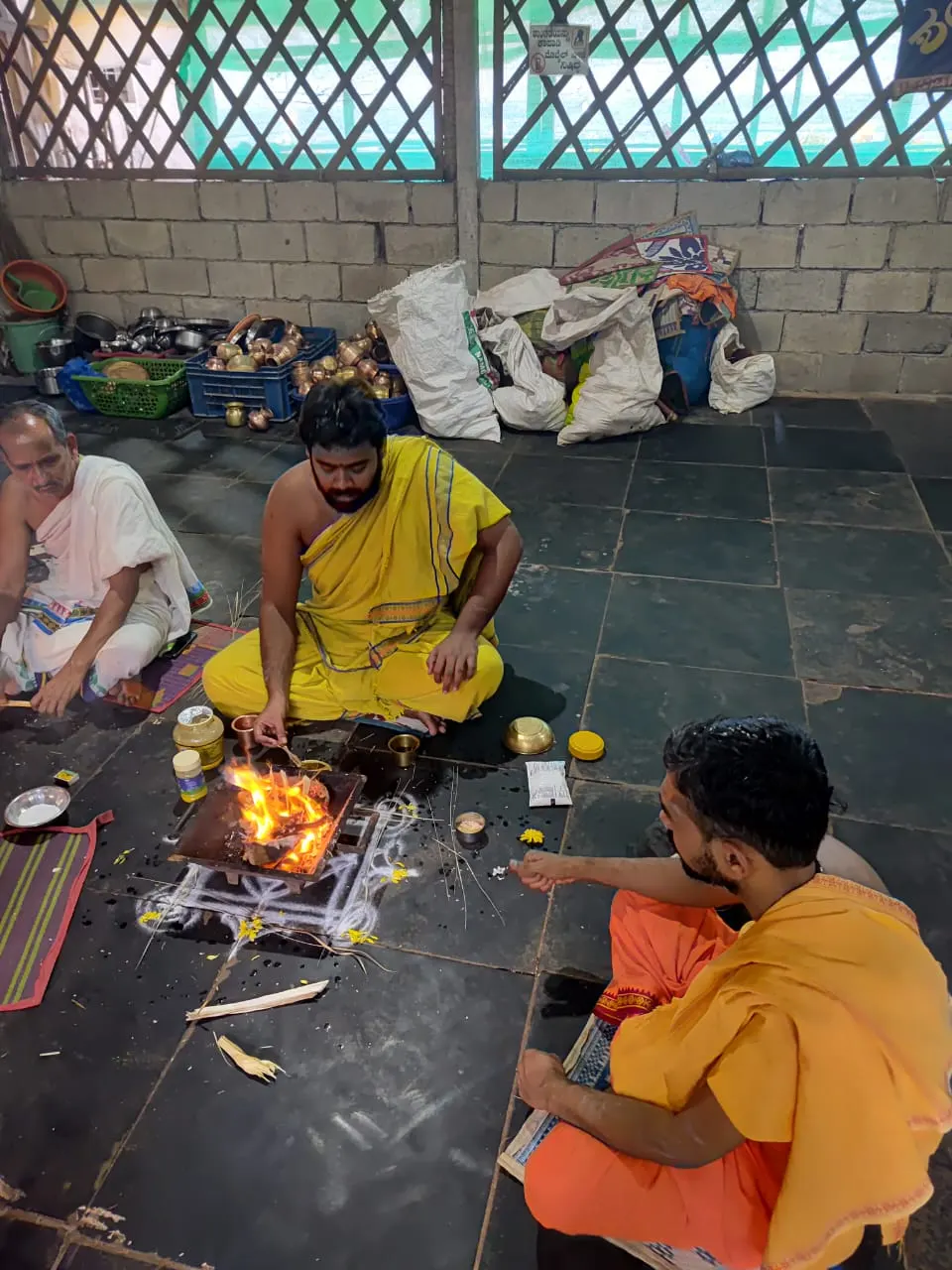
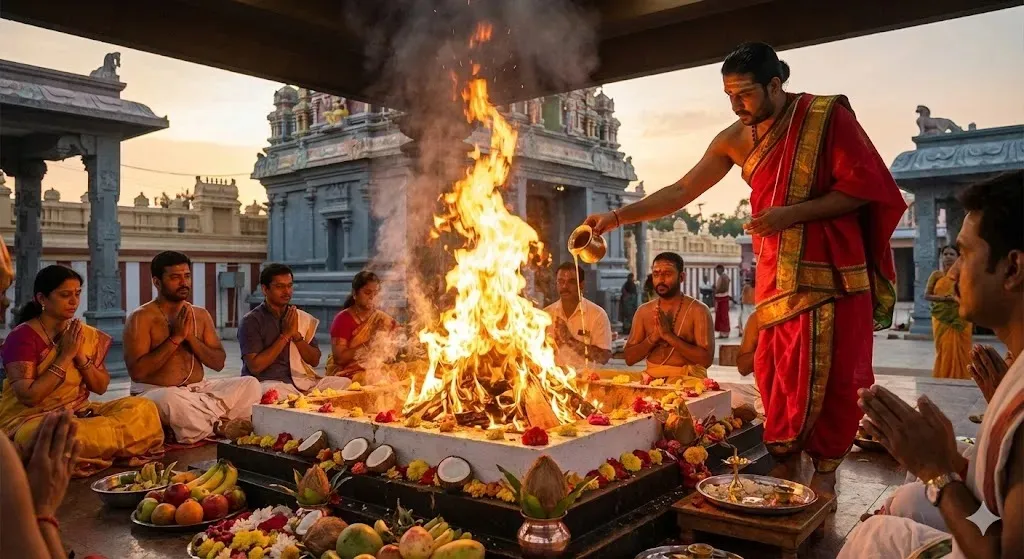
Photographs of homa fire offerings from our previous events, shared here to give a sense of the ceremony. Photographs from this Homam will be added after the event.
Yes. This Homam is being held as an online event — you join remotely from wherever you are, with the instructions sent after booking.
Yes. Tick "I am booking for someone else". Your details as the booking contact are kept separate from the participants named in the sankalpam.
Each package card lists exactly how many people are included in the sankalpam. Please read the card for the package you choose.
That is completely fine — just enter their own Gotra. Each participant whose Gotra differs from the rest is counted and priced as an additional entry, shown clearly in your total before you pay.
Choose "I don't know" for that detail. You can still book and pay — you are never charged extra for an unknown detail. Our team will arrange priest guidance and follow up with you.
Yes, until the correction deadline, using the private link on your confirmation page. Every change is recorded. A correction never changes the amount you already paid. After the deadline, please contact support.
After you transfer, enter the transaction reference (a screenshot is optional). Our team checks it against the bank record. A screenshot alone does not confirm a booking.
Yes. Our team can register you and record your cash payment against the same booking record.
No. It is optional. Essential instructions are also sent to you directly. Other group members may see your phone number if you join.
They are shown on your booking page and sent to you directly before the ceremony. They do not depend on group membership.
We will share a backup joining option with online participants. Details will be confirmed before the event.
Yes — Prasadam delivery is an optional add-on you can choose while booking, for a flat delivery charge shown in the form. It is not included automatically; you choose it only if you want it.
We currently ship only within the destinations shown at checkout. If your address is not serviceable, the add-on cannot be selected for that address.
A dispatch window will be published once the team confirms it. You will be notified after actual dispatch.
The published cancellation and refund policy will be linked here and shown before payment. It is still to be confirmed.
Use "Need help registering?" on this page. Support contact and hours are shown in the footer once confirmed.