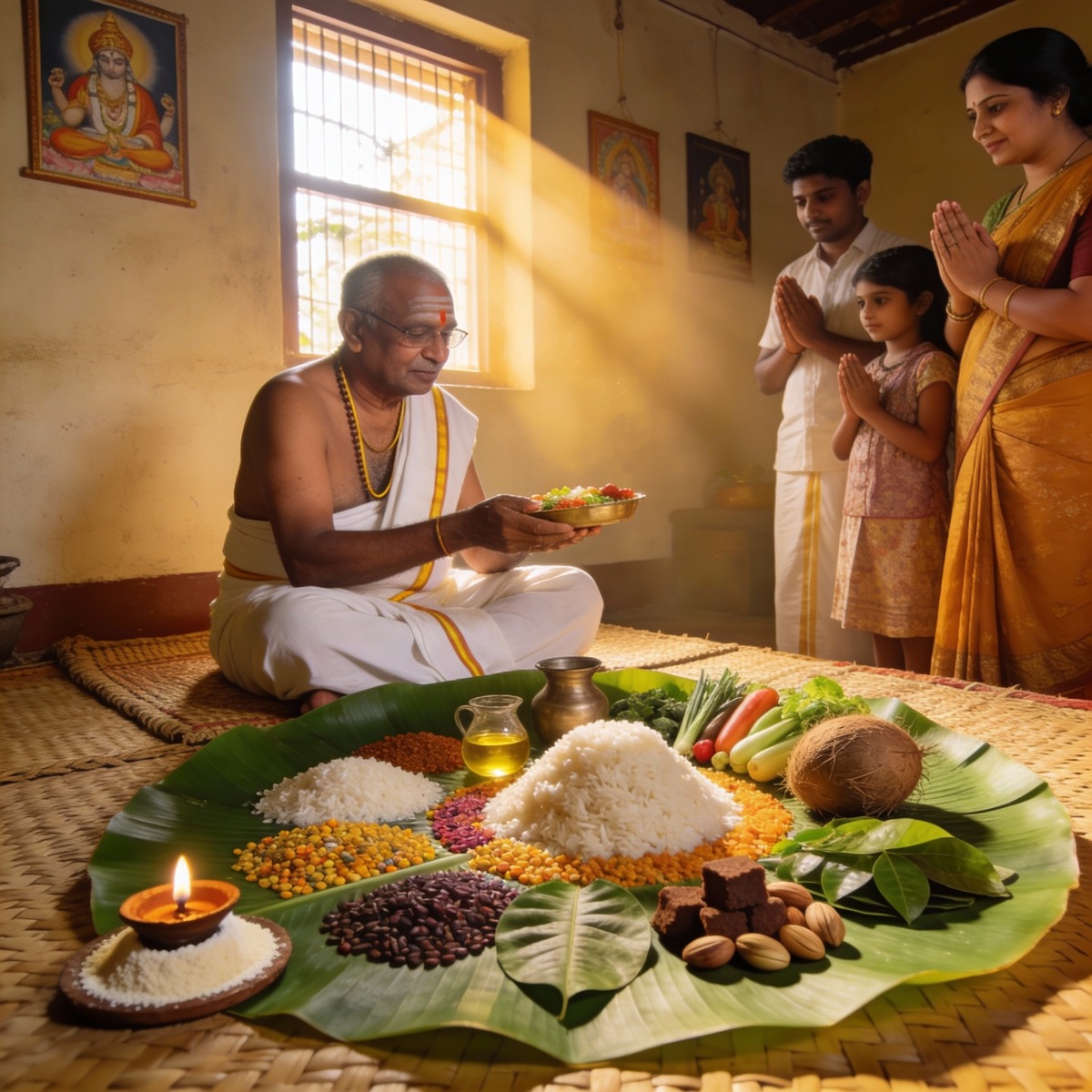
Swayampaka Danam: Sacred Gift of Food to Brahmins for Spiritual Blessings and Ancestral Peace
Discover Swayampaka Danam (Seedha Daan), the Vedic ritual of offering raw food to Brahmins. Learn its spiritual significance, benefits for ancestors, and how to perform this sacred act of giving.
Swayampaka Danam: The Sacred Practice of Offering Food With Divine Intention
In Vedic philosophy, daan (donation) is not merely charity—it is a sacred offering made to the Divine through acts of selfless giving, especially towards those dedicated to spiritual life. Among all forms of daan, Swayampaka Danam (also called Seedha Daan)—the offering of raw, uncooked food items to Brahmins—holds a uniquely powerful place. This ancient practice is believed to generate immense spiritual merit, pacify ancestors, and invite divine blessings into your home.
What Is Swayampaka Danam?
Swayampaka Danam is derived from two Sanskrit words: Swayam (self) and Paka (cooking). It literally means "self-cooked" or "food cooked by oneself." However, the deeper meaning refers to offering raw, uncooked food items directly to Brahmins so they can cook and eat according to their own rituals and preferences.
Unlike cooked food donations, raw food items allow the Brahmin recipient complete freedom in preparation—respecting their dietary choices, ritual observances, and spiritual practices. This is the essence of Swayampaka Danam: a gift that honors the recipient's autonomy and spiritual lifestyle.
The Spiritual Significance of Swayampaka Danam
Honoring Those Who Uphold Dharma
Brahmins, in the traditional system, were not merely a caste but a designation for those dedicated to preserving and practicing Vedic knowledge and rituals. They sacrificed material pursuits to maintain spiritual disciplines and serve as guides for society. Swayampaka Danam honors this sacred commitment by directly supporting those who have chosen the spiritual path.
The Principle of Anna Daan is Maha Daan
There is a famous Vedic saying: "Anna Daan is Maha Daan"—the gift of food is the greatest gift. Food is life itself. When you offer food to someone, you are offering sustenance, health, and the ability to live and serve. Among all gifts, food carries the highest spiritual merit because it directly supports the continuation of life.
Serving the Divine Through Brahmins
In Hindu philosophy, when you serve a Brahmin with sincere devotion, you are essentially serving the Divine itself. The Brahmin is seen as a representative of God on earth, a living channel of divine knowledge and grace. When you offer food to a Brahmin, you are performing a sacred act of serving the Almighty.
Purification of Karma Through Giving
The Garuda Purana and other sacred texts teach that daan, when performed with pure intention and without ego, has the power to purify negative karma. Swayampaka Danam performed with sincere devotion is equivalent to performing hundreds of sacred yajnas (fire rituals). It washes away past misdeeds and lifts the burden of karmic debt.
Key Benefits of Performing Swayampaka Danam
1. Removal of Pitru Dosha (Ancestral Afflictions)
One of the most powerful benefits of Swayampaka Danam is its ability to pacify and please ancestors. When performed with proper rituals during Pitru Paksha (the fortnight dedicated to ancestors), Shraddha rituals, or on Tithi Shraddha (death anniversaries), this daan reaches the ancestors and brings them peace.
Pitru Dosha—the affliction caused by displeased or suffering ancestors—can manifest as repeated failures, health issues, relationship problems, or inexplicable bad luck. Swayampaka Danam, performed with a priest's guidance and proper sankalp, directly remedies this dosha. Many families report significant positive changes after this ritual.
2. Attracts Divine Grace and Blessings
By supporting those dedicated to Vedic knowledge and spiritual practice, you naturally attract their blessings. A Brahmin priest who receives your daan with gratitude will genuinely pray for your wellbeing and that of your family. These blessings, rooted in spiritual power and sincere devotion, carry immense potency.
3. Invites Prosperity and Abundance
Vedic tradition teaches that giving generously opens the channels of abundance. The universe operates on the principle of circulation—when you give freely, you signal abundance, and abundance naturally flows back to you. Swayampaka Danam, performed regularly, becomes a powerful magnet for prosperity.
4. Ensures Peace and Harmony at Home
When ancestors are pleased through daan, they cease to trouble the living. The home becomes peaceful, family relationships improve, and unexpected obstacles diminish. Parents report that children become healthier and more obedient when ancestral blessings are secured through proper daan.
5. Supports Vedic Preservation
By offering to Brahmins who dedicate their lives to preserving Vedic knowledge, you become a partner in this sacred mission. Your daan directly supports the continuation of ancient wisdom, rituals, and spiritual practices. This creates a bond between you and the eternal tradition itself.
6. Purifies the Donor's Consciousness
The act of giving without expectation of return transforms the giver. Ego softens, compassion grows, and the mind becomes lighter. Regular practice of Swayampaka Danam gradually elevates your consciousness and brings you closer to spiritual realization.
7. Ensures the Welfare of Deceased Loved Ones
When you perform Swayampaka Danam in memory of a deceased family member, with the priest performing a proper sankalp (intention ritual) in their name, the merit of this giving reaches their soul. It helps them progress spiritually and ensures their peaceful existence in the afterlife.
Items Included in Swayampaka Danam
Swayampaka Danam typically includes raw, uncooked food items that a Brahmin family can use to prepare complete meals. Traditional items include:
Essential Grains and Legumes
- Rice (Chawal): At least 1 to 1.25 kg, as rice is the staple grain
- Various Lentils (Dals): Chana dal, moong dal, toor dal, urad dal (at least 3-4 varieties)
- Pulses: White peas, chickpeas, and other protein-rich items
Healthy Vegetables (Fresh or Dry)
- Bottle gourd, bitter gourd, ridge gourd, pumpkin
- Tomatoes, onions, green peppers
- Leafy vegetables (spinach, fenugreek leaves)
- Root vegetables (potato, turnip)
- Eggplant, beans, and seasonal vegetables
Essential Cooking Ingredients
- Ghee (clarified butter): 250-500 ml, for cooking and offerings
- Oil (Cooking oil): 250-500 ml
- Salt (rock salt preferred)
- Turmeric, chili powder, and spices
Additional Items
- Jaggery (Gur): For sweetness and nutritional value
- Coconut: Whole or dried, for cooking and offerings
- Betel leaves and areca nuts: Traditional items served after meals
- Tamarind (for flavoring)
- Sesame seeds, cumin, coriander seeds (spices)
Special Items
- Fruits: Bananas, plantains, sugar cane pieces (optional but appreciated)
- Milk products: Yogurt or paneer (optional)
The Sacred Ritual of Swayampaka Danam: Step-by-Step Process
1. Selection of Recipient Brahmin
Traditionally, the daan is given to a sincere, practicing Brahmin who observes rituals and lives a disciplined, sattvik (pure) lifestyle. Many families consult a temple or spiritual guide to identify worthy recipients. The recipient should be someone genuinely in need and dedicated to spiritual practice.
2. Gathering and Preparation of Items
All items are collected with care and sincerity. They are cleaned, sorted, and arranged on a large banana leaf (patra) or a clean cloth. The items should be fresh, good quality, and free from any defects—this shows respect for the recipient and the ritual.
3. Sankalp (Intention Ritual)
A Vedic priest performs a formal Sankalp before the donation. The priest states the donor's name, gotra (lineage), the specific purpose of the daan (e.g., for ancestral peace, family welfare, or removal of a specific dosha), and the date. This ritual invokes divine presence and sanctifies the donation with sacred intention.
4. Arrangement on Banana Leaf or Cloth
All items are arranged beautifully and respectfully on a banana leaf or clean cloth. Each category of items is placed separately—grains together, vegetables together, spices together. This organized arrangement shows the value and respect accorded to the gift.
5. Invoking Divine Presence
Before presenting the daan, the priest may chant mantras invoking deities like Lord Ganesha, Lakshmi (for prosperity), and the presiding deities of the home. This elevates the vibrational frequency of the donation and invokes divine blessings.
6. Presentation With Reverence
The donation is presented to the Brahmin with both hands, bowed head, and sincere gratitude. No expectation or condition is attached. The giver simply offers the gift as an act of devotion, trusting that the Divine will bless them in return.
7. Receiving Blessings
The recipient Brahmin, moved by the sincere gift, naturally offers blessings to the donor family. He may perform a small ritual blessing (Ashirvaad) or simply speak kind words of goodwill. These blessings, rooted in gratitude and spiritual power, are believed to carry immense potency.
8. Distribution of Prasad
Often, a small portion of cooked food from the daan is brought back as prasad (blessed food) and distributed to family members. This ensures that the blessings of the ritual reach the entire family.
When to Perform Swayampaka Danam
While Swayampaka Danam can be performed anytime, it is especially recommended during:
- Pitru Paksha: The lunar fortnight dedicated to ancestors (typically September-October)
- Tithi Shraddha: On the death anniversary of a deceased family member
- Amavasya (New Moon): Considered an auspicious time for ancestral rituals
- Family Milestones: Births, marriages, housewarming, business launches
- Remedial Purposes: To address Pitru Dosha or other ancestral afflictions
- Regular Giving: Monthly or yearly as a spiritual practice
The Divine Exchange: Understanding Daan
In Vedic philosophy, daan is not one-way giving but a sacred exchange. When you give with a pure heart, you initiate a spiritual transaction with the universe:
- You offer material resources with devotion
- The recipient offers blessings and prayers in return
- The Divine multiplies your gift manifold, returning it to you in the form of grace, protection, and abundance
This is not a business transaction but an alignment with the universal law of circulation. When you give freely without attachment, you declare to the universe: "I trust in abundance. I know there is enough for all." This declaration of faith itself becomes a magnet for more abundance.
Swayampaka Danam in Modern Times
In today's world, finding sincere, practicing Brahmins may be challenging in urban areas. However, many temples and spiritual organizations help connect donors with worthy recipients. Online platforms dedicated to Vedic traditions also facilitate Swayampaka Danam, allowing you to perform this ritual even if you cannot personally meet the recipient.
The principle remains the same: sincere giving with pure intention, performed according to Vedic guidelines, generates the same spiritual merit regardless of the logistics.
Final Reflections
Swayampaka Danam is a beautiful blend of gratitude, spirituality, and social responsibility. When you offer food to a Brahmin dedicated to spiritual practice, you are not merely feeding a person—you are:
- Honoring ancient traditions of knowledge preservation
- Appeasing your ancestors and securing their blessings
- Inviting prosperity and protection into your home
- Participating in the divine cycle of giving and receiving
- Purifying your own karma and elevating your consciousness
If your family is facing unexplained obstacles, health issues, or relationship challenges, or if you simply wish to honor your ancestors and invite divine blessings, consider performing Swayampaka Danam with the guidance of a knowledgeable priest. This sacred act, rooted in thousands of years of Vedic wisdom, has the power to transform family karma and bring lasting peace and prosperity.
Remember: the greatest wealth is not what you accumulate but what you give with love and devotion. In the act of giving, you become a channel of divine grace.