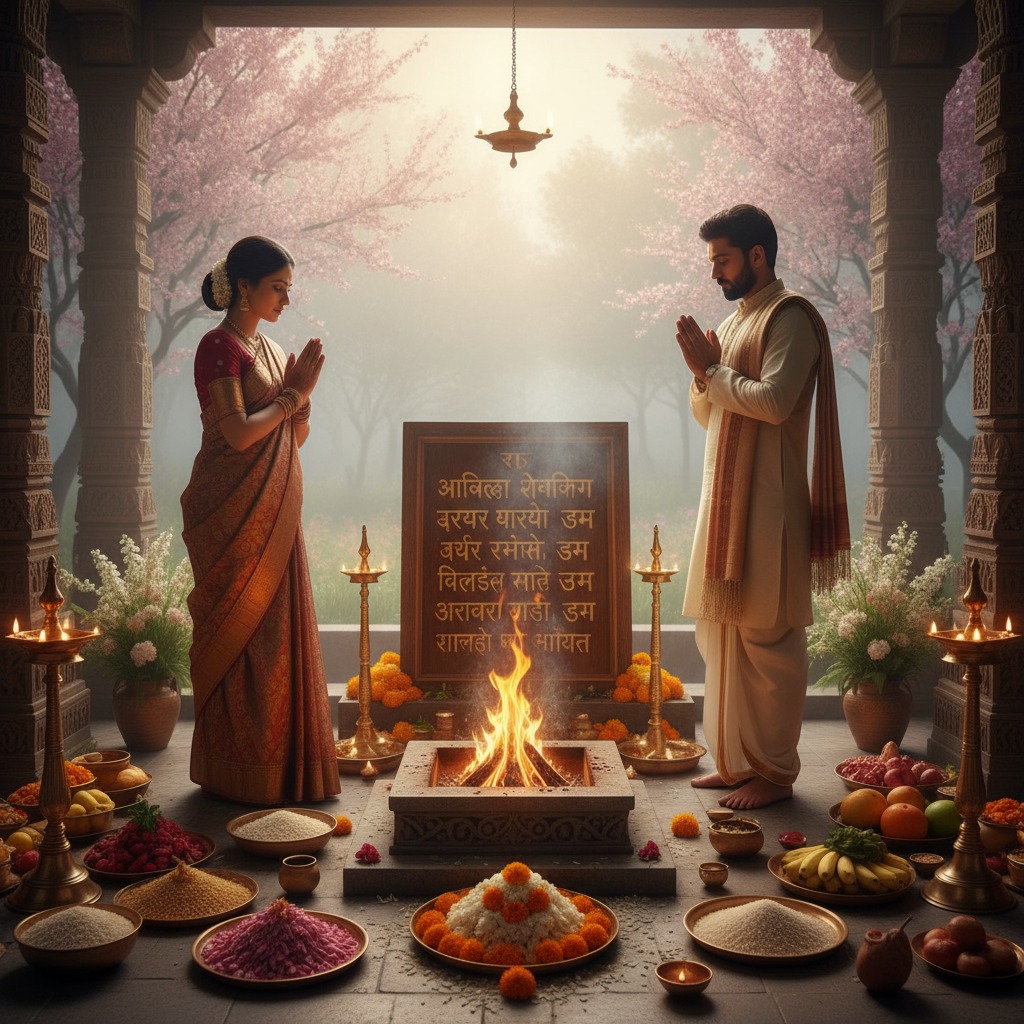
Garbhadaanam: The Sacred Hindu Ceremony for Conceiving Spiritually Blessed Children
Understand Garbhadaanam, the Vedic samskara performed before conception to invite a healthy, virtuous and spiritually inclined child into the family.
Garbhadaanam: Preparing Spiritually for the Gift of a Child
In the Vedic view, becoming parents is not only a biological event but a sacred responsibility. The soul that enters the womb carries its own karma, yet the quality of the parents’ mind, lifestyle and intention strongly influences the type of soul that comes. To prepare for this sacred moment, Hindu tradition prescribes a powerful samskara known as Garbhadaanam.
What Is Garbhadaanam?
The word “Garbhadaanam” comes from two Sanskrit roots – garbha (womb) and daana (placing or gifting). It is a purification and blessing ceremony performed by married couples before conception, to ensure that pregnancy begins under the most auspicious and sattvik conditions.
Rather than approaching conception casually or in a purely physical way, Garbhadaanam transforms it into a conscious spiritual act – inviting a noble soul into the family with prayer, discipline and devotion.
Spiritual Significance of Garbhadaanam
Purifying the Lineage
Vedic texts teach that when Garbhadaanam is practiced regularly in a family, the lineage remains pure, dharmic and spiritually strong. Children are more likely to be healthy in body and mind, inclined towards higher values and able to uplift society.
Rising Above Lust into Sacred Union
In this samskara, the couple is reminded that the act of conception should not be driven by uncontrolled passion but by clarity, responsibility and devotion. Mantras, vows and fire offerings help transform ordinary desire into sacred intention.
Inviting a Spiritually Advanced Soul
When both partners purify their bodies and minds, follow auspicious timing and pray sincerely, it is believed that a spiritually evolved soul is naturally attracted to such a womb. In this way, Garbhadaanam becomes a doorway through which higher souls take birth.
Main Components of the Garbhadaanam Ceremony
1. Physical and Mental Purification
The ritual usually begins with both husband and wife taking a ceremonial bath (snana). They wear clean, traditional clothes, observe dietary discipline and maintain celibacy for a period leading up to the ceremony. This process calms the mind, balances the body and prepares them for the yagna.
2. Sankalpa – Declaring Sacred Intention
In front of the sacred fire, the priest guides the couple to take a sankalpa, clearly stating their names, gotra (lineage) and their sincere intention to conceive a healthy, virtuous child for the sake of dharma and service to society.
3. Agni Hotra / Yagna
A Vedic fire ritual is then performed. Into this fire, the couple offers ghee, grains, herbs and other sacred materials while specific mantras are chanted. Agni, the fire god, acts as a divine messenger, carrying their offerings and prayers to the higher realms.
4. Chanting of Garbhadaanam Mantras
Selected verses from the Vedas and smritis are recited, praying for:
- A child with a healthy body and pure mind
- Longevity, intelligence and courage
- Devotion to God and respect for elders
- Contribution to family, society and dharma
5. Blessings from Elders and Guru
At the end of the ceremony, elders bless the couple with akshata (rice), flowers and kind words. Their blessings further strengthen the intention and create a powerful protective aura around the future child.
Benefits of Performing Garbhadaanam
For the Child
- Higher chance of good physical health and immunity
- Balanced emotional nature and strong nervous system
- Natural inclination towards honesty, compassion and spirituality
- Fewer negative tendencies carried from past lives being activated
For the Parents
- Deeper love, understanding and mutual respect between husband and wife
- Greater sense of responsibility and maturity before becoming parents
- Purification of their own past karmas through mantra and yagna
- Confidence that they have done their best from a spiritual perspective for their child
For the Family and Lineage
- Preservation of dharmic values and culture across generations
- Creation of a lineage filled with stable, wise and compassionate individuals
Garbhadaanam in Modern Times
Today, many couples focus only on medical tests and physical fitness before pregnancy. While these are essential, ancient seers also emphasised the mental and spiritual environment at the time of conception. Garbhadaanam beautifully complements modern science by adding the missing dimension of consciousness.
Even if a full traditional ceremony is not possible, couples can adopt the spirit of Garbhadaanam by:
- Following sattvik food and lifestyle for a few months before planning for a baby
- Reducing alcohol, smoking and over‑stimulation of the mind
- Chanting mantras together, meditating and reading sacred texts
- Praying sincerely for a child who will be a blessing to the world
Conclusion
Garbhadaanam reminds us that bringing a child into the world is a divine partnership with God, not just a private decision. By performing this samskara or at least adopting its principles, couples honour the sacredness of conception and invite a noble soul into their homes.
If you are planning to start or expand your family, consider speaking with a knowledgeable priest or spiritual guide about Garbhadaanam. A few hours of sincere preparation today can shape the destiny of generations to come.